
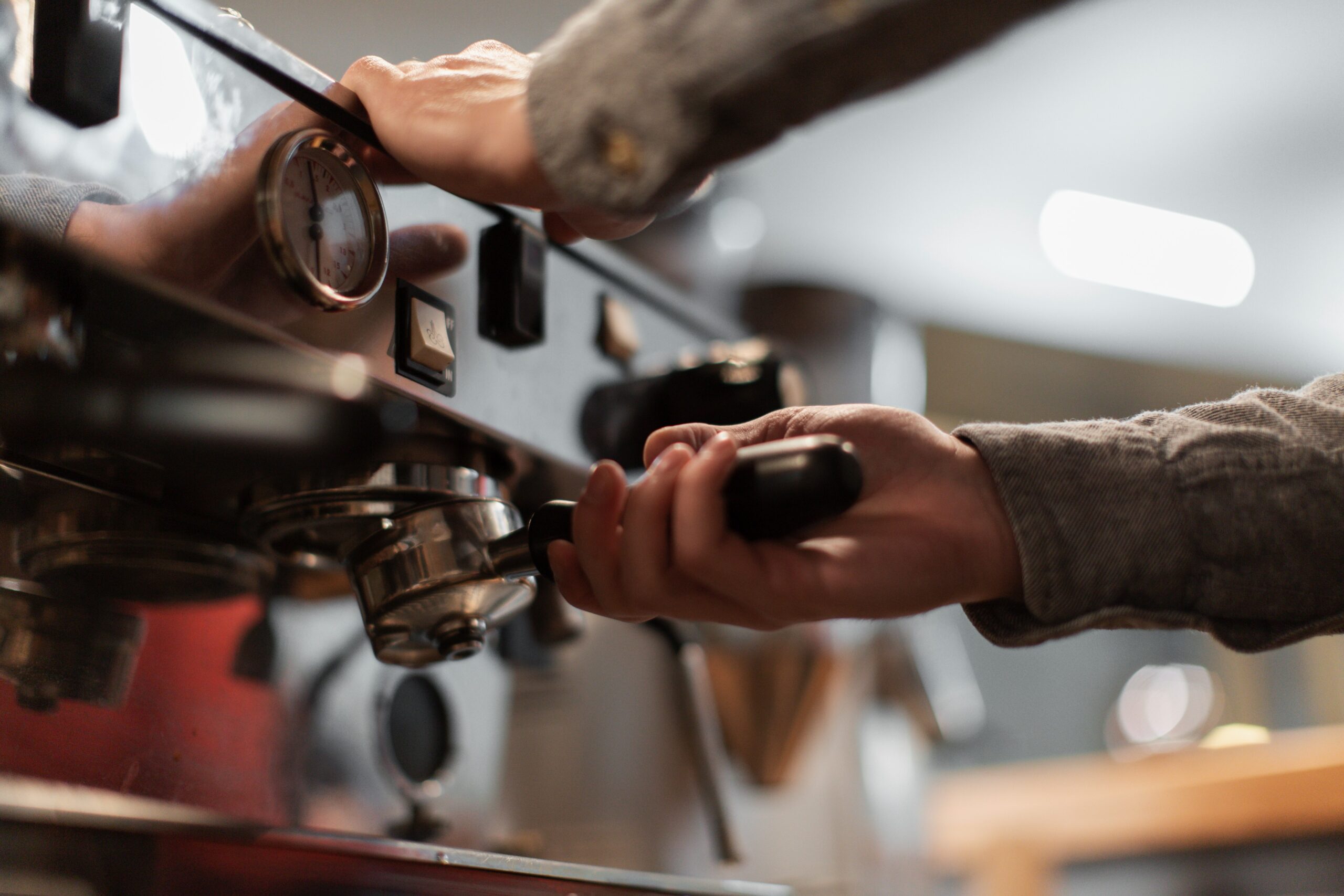

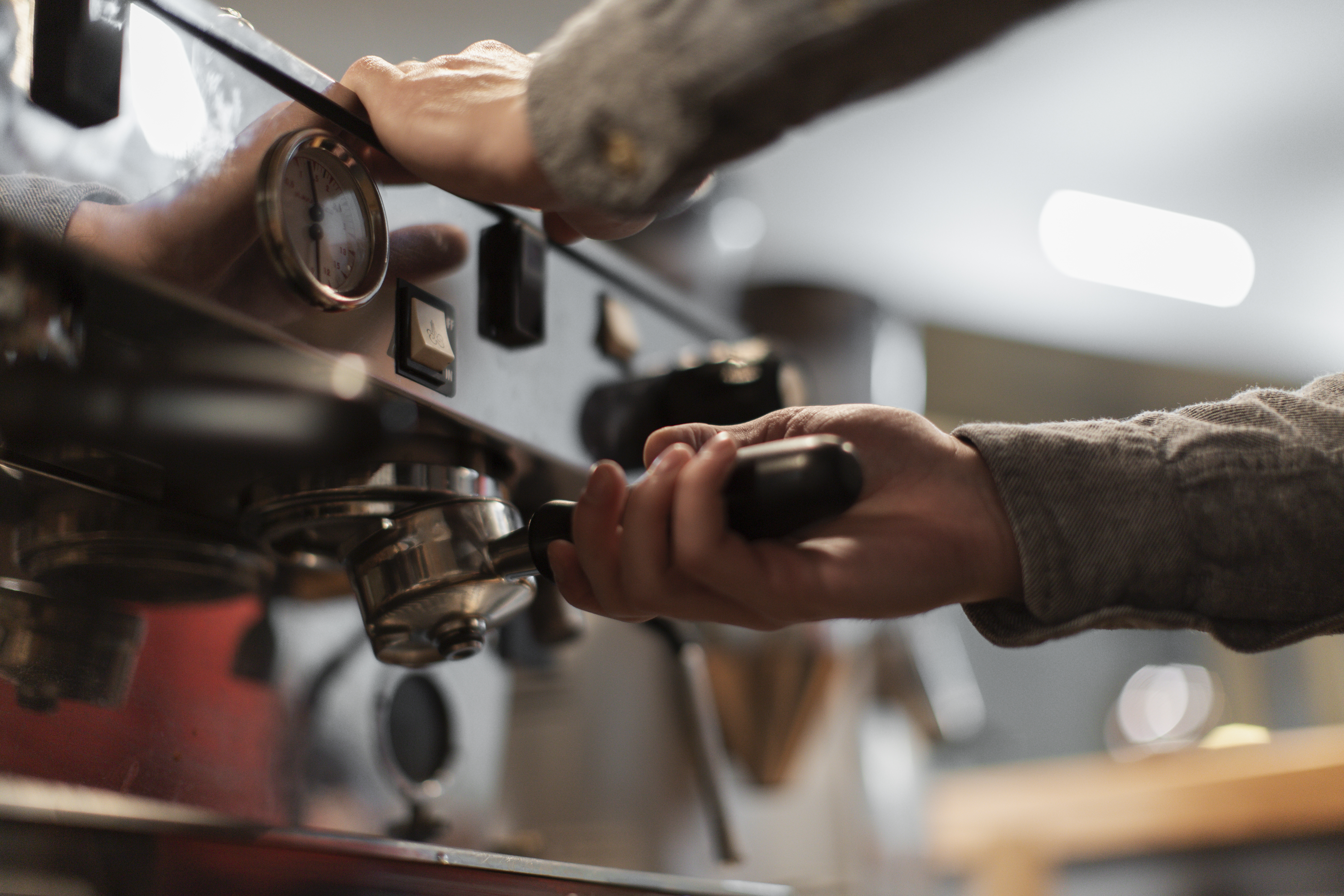
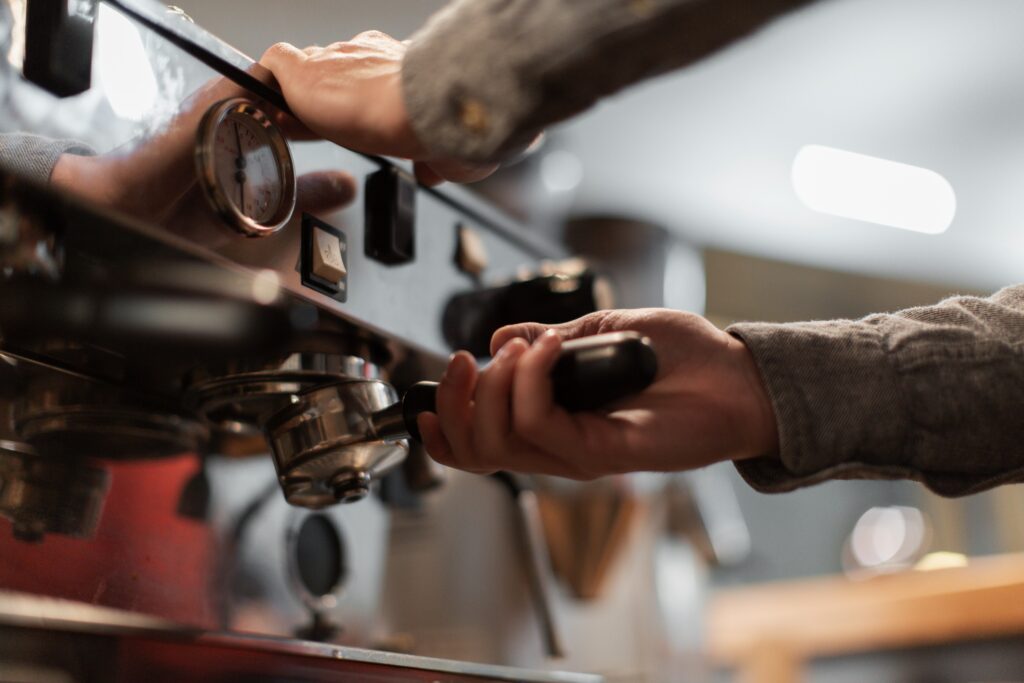
You're three days into your first barista job, and the grinder's choking every shot. The portafilter won't lock in without force, the steam wand's screeching, and there's a queue of six flat whites waiting. Nobody told you that operating espresso machines means diagnosing problems in real time while customers wait.
Your Grinder Controls More Than The Machine Does
The grinder dictates extraction before water touches coffee. Grind too fine, and you'll choke the machine. Water can't push through the puck, pressure spikes, and the shot drips out in 50 seconds. Grind too coarse, and water rushes through in 15 seconds, pulling almost nothing with it.
Fresh beans and week-old beans need different settings. Adjust the dial by half a step, pull a shot, taste it. Don't jump three steps and guess. Doser grinders hold a small reserve of grounds between the burrs and the portafilter. Doserless models grind straight into the basket. Both wear over time, so what worked last month won't work forever.
Dose And Tamp Determine Whether Water Flows Evenly
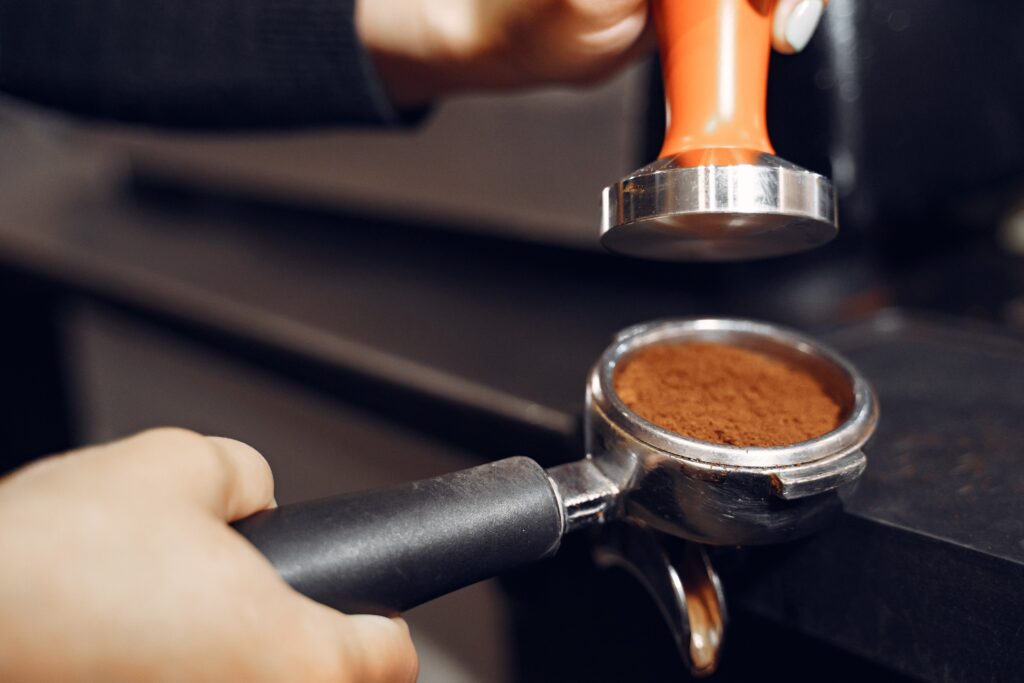
You need 18–22 grams of ground coffee for a standard double shot, aiming for 36–44 grams out. Overfill the basket, and the puck sits too high and creates an uneven seal. Underdose and water find gaps, rushing through weak spots.
Your tamp doesn't need to be hard. It needs to be level. Press down evenly across the whole puck. If one side sits higher, water flows toward the lower side, and you get channelling. So, wipe the portafilter rim before you lock it in.
Watch The Shot, Not The Timer
Purge the group head before locking in the portafilter. That clears old coffee and brings the temperature back to baseline. Lock it firm, but don't crank it past the point of resistance, as you'll wear the lugs and gasket faster.
Operating espresso machines means reading the flow. Most shots take 25–30 seconds, but the colour tells you what's happening. Something you only learn once the queue starts moving, and mistakes will cost you time.
What the shot tells you:
- Pale stream early: grind too coarse or the basket is underfilled
- Slow drips or staling: grind too fine or overdosed
- Uneven flow: puck wasn't level, or water found a weak spot
The problem isn't pulling a shot. It's figuring out why the last one failed before the next docket prints.
Questions You'll Have Within The First Week
Do all commercial espresso machines work the same way?
Group heads, portafilters, and steam wands are standard across brands. The difference between machines is how they handle heat. You’ll notice it when you’re pulling shots and steaming milk at the same time.
What's the difference between a heat exchange and a dual boiler machine?
Heat exchange machines use one steam boiler with a tube running through it to heat brew water. Dual boilers have separate tanks for espresso and steam, preventing temperature drops when you're steaming milk. Dual boilers offer better consistency, and heat exchange models recover faster under heavy use.
How often do group heads need backflushing during a shift?
Backflushing happens at the end of each day, not mid-shift. You lock in a blind basket with cleaning powder and run the pump in 10-second bursts to clear oil and residue from the dispersion screen. During service, flushing means running water through the group without a portafilter.
Why does the portafilter need to lock in firmly but not be overtightened?
Locking creates a seal between the portafilter ears and the group head gasket. Lock it until it stops naturally. Forcing it further compresses the gasket unevenly and damages the lugs. A worn gasket leaks, which means you’re losing time during peak service.
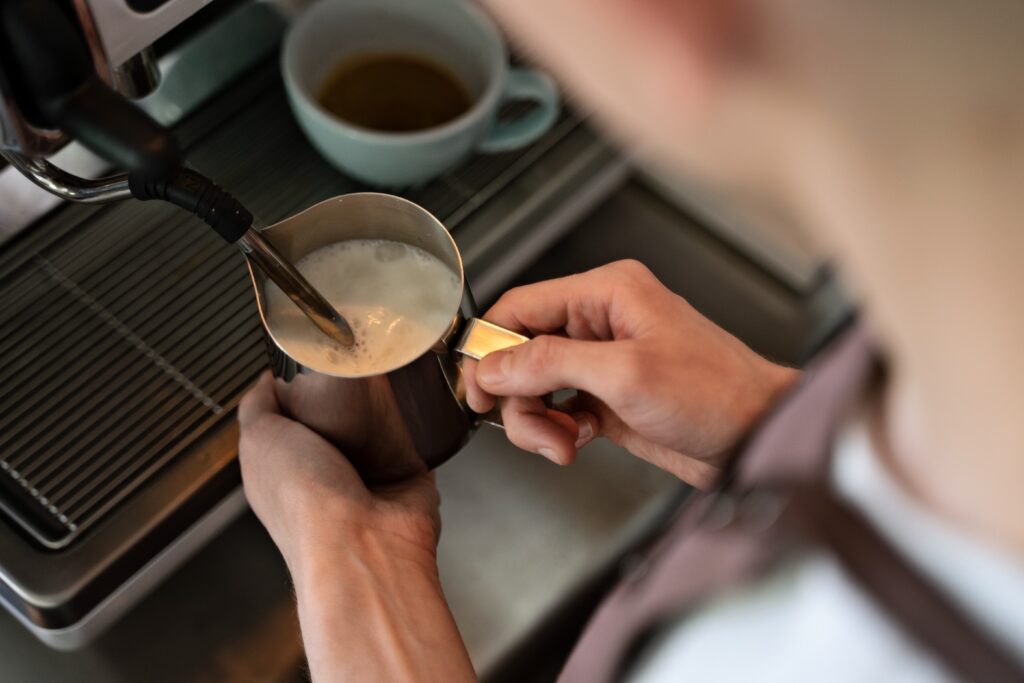
Milk Steaming Isn't Intuitive
Stretch the milk first. Tip just below the surface, introducing air for the first few seconds. You'll hear a light tearing sound, not a scream. Lower the wand to create a whirlpool, heating the milk without adding more air.
Stop at 55–65°C. Hotter milk loses sweetness and becomes harder to pour. If you're hearing screeching or seeing big bubbles, the wand's too shallow or angled wrong. Clean the wand immediately after each jug—dried milk can clog the steam holes. Training courses at Coffee School give you repetition with commercial steam wands until the movements feel automatic, before you’re expected to do it under pressure.
Clean Daily Or Pay For It Later
Wipe and purge the steam wand after every jug. Dried milk narrows the holes and creates buildup. Food Standards Australia requires that all food-contact surfaces and equipment in cafés be kept clean and sanitary. Empty the knock box before it overflows. Scrub portafilter baskets nightly with hot water and a brush, and check for blockages in the holes.
Get A Foundation Before You Start Applying
Most cafés in Melbourne and Sydney won't hire baristas who can't pull consistent shots. Coffee School runs courses using the same equipment you'll see on the job. Enrol in a barista course to practise grinder calibration, shot extraction, and milk texturing before you're standing in front of a queue trying to diagnose why every shot's choking.