
If you're considering a career as a barista, one of the first questions you'll probably ask is whether completing a barista certificate is worth it. While many cafés advertise entry-level positions, others ask for previous experience, making it difficult to know the best way to get started.
Starting a career as a barista doesn't require years of experience, but it does require practical skills, confidence and a willingness to learn. Completing a barista course allows you to become familiar with commercial espresso machines, milk texturing, coffee recipes and café workflow before you apply for your first job. For many beginners, this practical experience makes the transition into a busy café much smoother.
Many employers are willing to hire beginners, but they also appreciate applicants who already understand the fundamentals. Arriving with practical experience means you'll require less supervision during your first shifts and can begin contributing to the team more quickly.
Whether you're leaving school, changing careers or looking for your first hospitality job, professional barista certification can help you build the practical skills employers value while giving you the confidence to step behind the espresso machine for the first time.
Is a Barista Certificate Worth It?
A barista certificate isn't legally required to work in Australia, but it can improve your chances of getting hired. Many cafés value applicants who already understand espresso extraction, milk texturing, customer service and commercial coffee equipment because it reduces training time and helps new employees become productive more quickly.
Do You Need a Barista Certificate to Work in Australia?
No. There are currently no Australian regulations requiring baristas to hold a formal qualification before working in a café.
However, what employers prefer is often different from what they're legally required to ask for.
Most cafés operate in fast-paced environments where experienced staff have limited time to train complete beginners. During busy breakfast and morning coffee rushes, every team member needs to work efficiently while maintaining quality and customer service.
For that reason, many employers favour applicants who already have a basic understanding of coffee preparation and café workflow. They know these employees are likely to settle into the role more quickly and require less supervision during their first few weeks.
Completing a practical coffee training course doesn't guarantee employment, but it does demonstrate initiative. It shows you're serious about working in hospitality and have invested time developing your skills before applying for work.
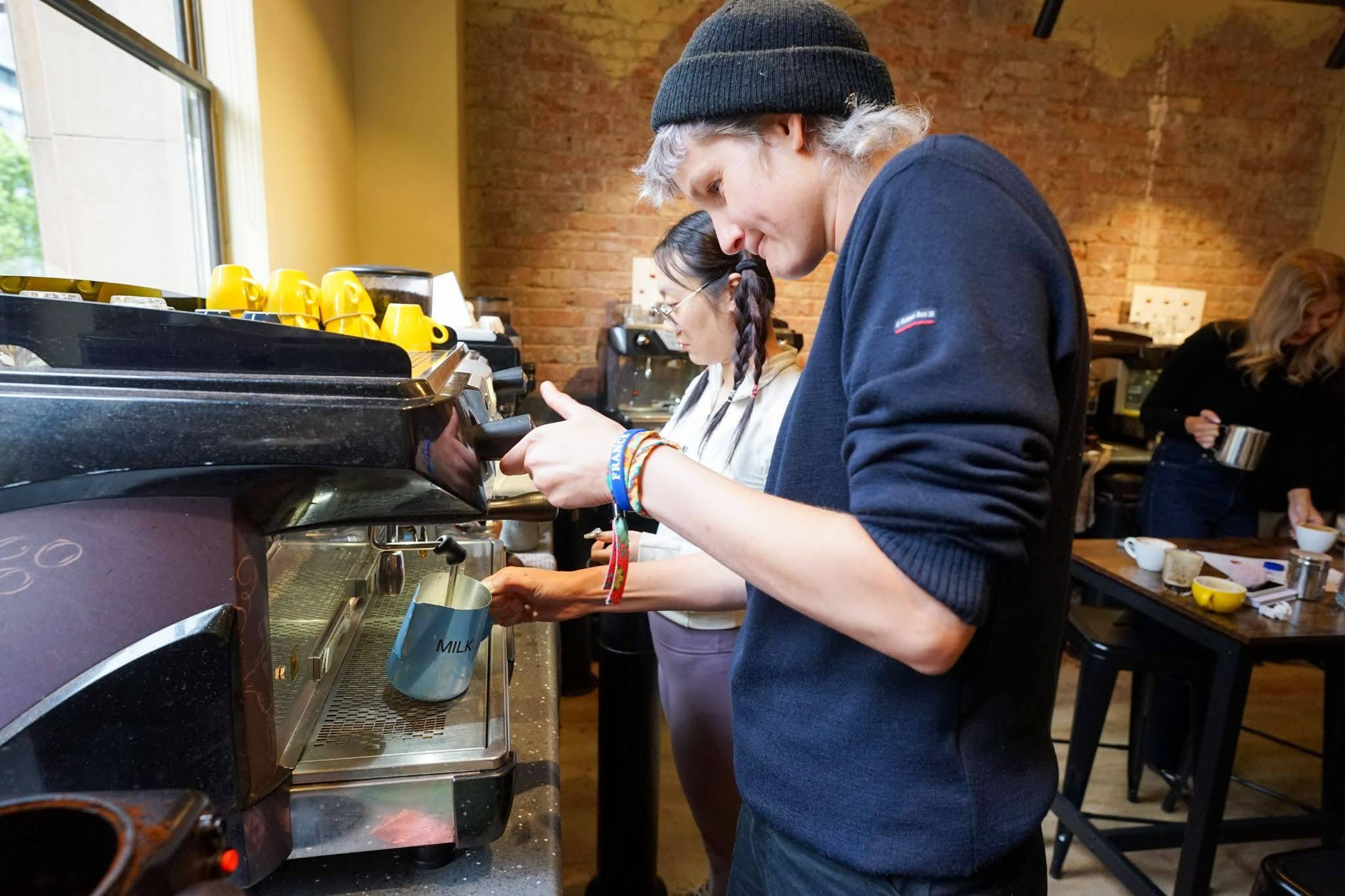
At Coffee School, students learn in a practical café-style environment using commercial espresso machines rather than simply watching demonstrations. This hands-on approach helps students become familiar with the equipment they'll use in real workplaces.
What Café Employers Really Look For
Many people assume employers only care about previous café experience.
In reality, that's only one part of the hiring process.
When interviewing beginner applicants, most café owners look for people who have the right attitude and the potential to become reliable team members.
A Positive Attitude
Technical skills can always be improved.
A willingness to learn, accept feedback and contribute positively to the team is much harder to teach.
Applicants who are enthusiastic, friendly and genuinely interested in coffee often leave a stronger impression than those who rely solely on previous experience.
Reliability
Hospitality businesses depend on staff arriving on time and being ready to work during busy periods.
Showing that you're dependable and communicate well is one of the easiest ways to stand out during the recruitment process.
Customer Service
Being a barista is about far more than making coffee.
You'll spend much of your day interacting with customers, taking orders, answering questions and helping create an enjoyable café experience.
Strong communication skills, patience and professionalism are qualities employers consistently value.

Practical Coffee Skills
This is where professional training can make a significant difference.
Applicants who already understand the basics of coffee preparation require less training and generally feel more confident during trial shifts.
Some of the core barista skills employers like to see include:
- Espresso extraction
- Milk texturing
- Grinder adjustment
- Coffee recipes
- Cleaning procedures
- Safe operation of commercial coffee equipment
You don't need to master every skill before applying for work, but having practical experience gives employers confidence that you'll continue improving once you're hired.
Why a Professional Barista Certificate Can Give You an Advantage
A professional barista certificate is about much more than receiving a piece of paper at the end of a course.
Its real value comes from developing practical skills before you enter the workplace.
Instead of learning everything for the first time during a busy café shift, you'll already understand how commercial espresso machines operate, how milk should be textured and how coffee recipes are prepared consistently.
Professional training can also help you:
- Build confidence before your first hospitality job.
- Develop muscle memory through repeated practice.
- Become familiar with commercial coffee equipment.
- Understand efficient café workflow.
- Learn correct cleaning and maintenance procedures.
- Demonstrate commitment to prospective employers.
Hands-on learning is particularly valuable because making coffee is a practical skill.
Watching someone prepare espresso is very different from adjusting the grinder yourself, steaming milk or pouring multiple coffees in succession.
That's why Coffee School's barista training courses focus heavily on practical learning. Students spend their time making coffee, practising techniques and developing confidence on commercial espresso machines rather than sitting through lengthy theory sessions.
While completing a course won't replace workplace experience, it provides a strong foundation that many employers appreciate when hiring beginners.
What You'll Learn During Barista Certification
A quality beginner barista course should prepare you for the practical tasks you'll perform every day in a commercial café.
Rather than simply teaching you how to make a latte, professional training explains the complete coffee-making process and gives you the opportunity to practise until your movements become more natural.
Espresso Extraction
Every great coffee starts with a properly extracted espresso.
You'll learn how grind size, coffee dose, tamping pressure and extraction time influence flavour and consistency. These fundamentals help you understand why one coffee tastes balanced while another may be bitter or sour.
Understanding extraction also makes it much easier to identify problems when working in a busy café.
Milk Texturing
Learning to produce smooth, silky microfoam is one of the most important skills for any aspiring barista.
You'll practise stretching milk correctly, controlling temperature and producing the texture required for flat whites, cappuccinos and lattes.
Developing this skill takes repetition, but understanding the relationship between milk temperature and texture makes improvement much faster. The science behind milk temperature and texture for perfect lattes also helps explain why consistency is so important.
Grinder Adjustment
Coffee changes throughout the day.
Humidity, temperature and bean freshness all affect how espresso extracts, which means grinders require regular adjustment.
Learning how to recognise these changes is an important workplace skill that helps maintain coffee quality throughout service.
Latte Art
Basic latte art is often introduced once students become comfortable texturing milk consistently.
Simple patterns such as hearts and leaves help improve pouring control while creating an attractive finished coffee. Students wanting to continue developing these techniques often choose a dedicated Latte Art Course.
Café Workflow and Equipment Care
Professional training also introduces the daily routines that keep cafés operating efficiently.
This includes preparing for busy service periods, maintaining a clean workstation and correctly cleaning commercial espresso machines and grinders at the end of each shift.
These practical habits are just as important as making great coffee because they contribute to consistency, hygiene and equipment longevity.
Coffee School's practical courses give students the opportunity to operate commercial espresso machines, prepare a wide variety of coffees, practise milk texturing and become comfortable working in a realistic café environment before applying for their first hospitality role.
Ready to improve your chances of landing your first café job? Building practical skills before your first interview can make a real difference, and Coffee School's barista training courses are designed to help students develop the confidence employers are looking for.
Can You Get a Barista Job With No Experience?
Yes. Many cafés across Australia hire people with no previous barista experience every year.
The key is showing employers that you're willing to learn and already have a solid understanding of the role. While some businesses provide on-the-job training, many prefer applicants who have completed practical barista certification because it reduces the amount of time needed to teach the basics.
If you have little or no experience, you can strengthen your application by:
- Completing a practical barista certificate.
- Building confidence using commercial espresso machines.
- Learning the most common coffee recipes.
- Demonstrating excellent customer service skills.
- Being available for mornings, weekends and public holidays.
Every experienced barista started as a beginner. Employers aren't expecting perfection—they're looking for someone with the right attitude and the potential to become a valuable member of the team.
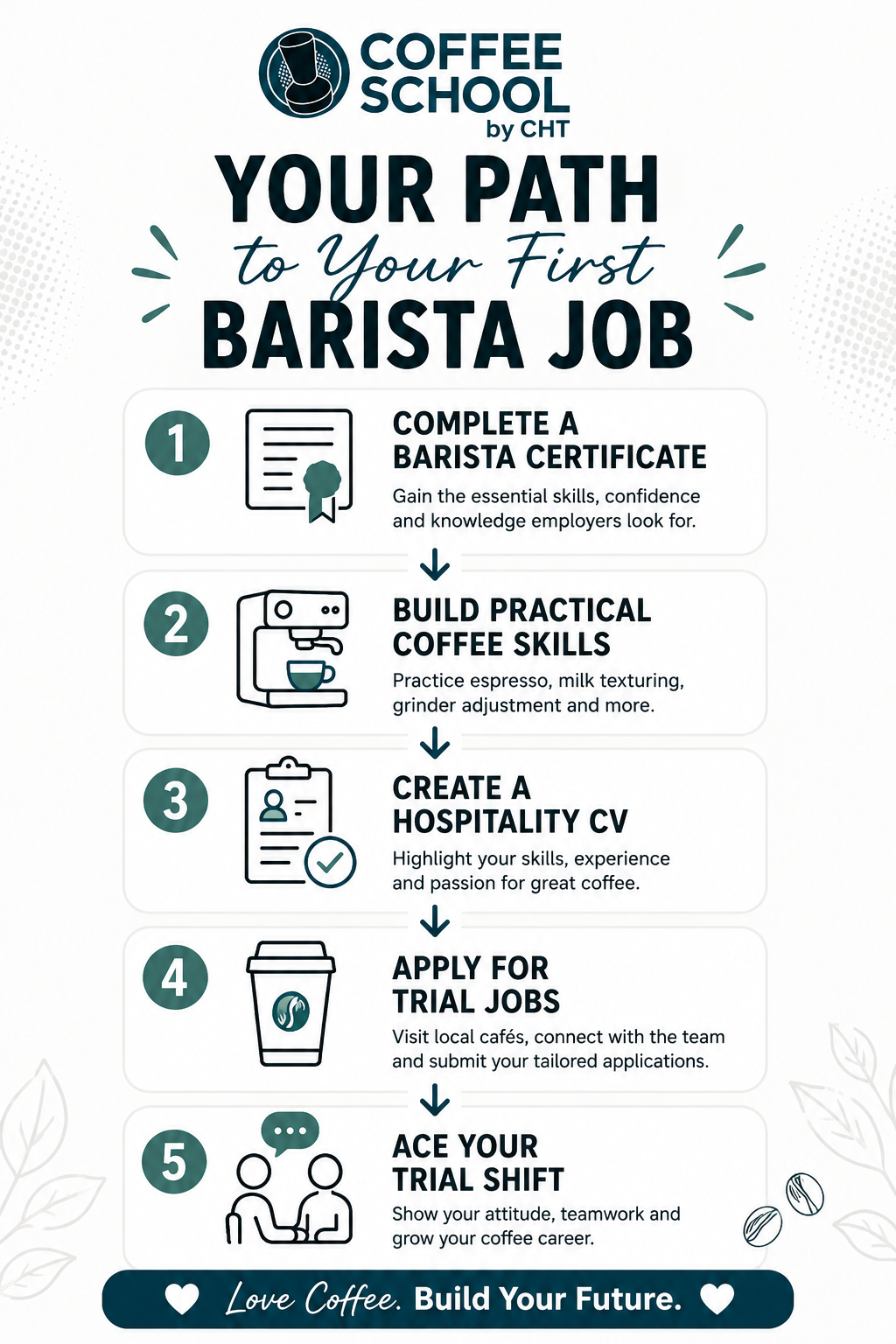
6 Tips to Help You Get Your First Barista Job
1. Complete a Practical Barista Course
Hands-on training helps you become familiar with commercial coffee equipment before you start applying for jobs. It also demonstrates to employers that you're committed to working in hospitality.
2. Create a Hospitality-Focused CV
Even if you've never worked in a café, you probably have transferable skills.
Highlight qualities such as customer service, teamwork, communication, reliability and working under pressure. These are all highly valued in hospitality.
3. Visit Cafés in Person
Independent cafés often appreciate meeting applicants face-to-face.
Choose a quieter time of day, introduce yourself professionally and leave a tailored CV. A friendly first impression can make a lasting impact.
4. Be Flexible With Your Availability
Many cafés are busiest early in the morning, on weekends and during public holidays.
Being available for these shifts can significantly improve your chances of securing your first role.
5. Continue Learning About Coffee
The best baristas never stop learning.
Understanding coffee origins, roasting methods and different brewing techniques helps you answer customer questions with confidence and develop a deeper appreciation for the craft. Learning more about how coffee beans are grown, processed and roasted is a great place to start.
6. Stay Positive
Not every application will lead to an interview, and not every interview will result in a job offer.
Each application and trial shift is an opportunity to improve your confidence and gain experience. Persistence is often one of the biggest factors in finding your first café job.
Frequently Asked Questions
Is a barista certificate required in Australia?
No. A barista certificate isn't legally required to work as a barista in Australia. However, many employers prefer applicants who have completed practical training because they're often more confident using commercial coffee equipment.
How long does barista certification take?
Course lengths vary depending on the provider and the level of training. Many introductory practical courses can be completed in a single day, while more advanced programs take longer. You can compare the available Coffee School barista courses to find the option that best suits your goals.
Do cafés provide training for beginners?
Some cafés offer comprehensive training, while others expect new employees to arrive with a basic understanding of espresso preparation, milk texturing and café workflow. Completing professional training beforehand can help make the transition into the workplace much easier.
What skills should a beginner barista have?
New baristas benefit from developing:
- Espresso extraction
- Milk texturing
- Grinder adjustment
- Customer service
- Communication
- Teamwork
- Time management
- Cleaning and equipment care
These practical and interpersonal skills provide a strong foundation for working in busy café environments.
Will a barista certificate help me get hired?
A barista certificate won't guarantee employment, but it can improve your application by demonstrating practical skills, commitment and workplace readiness. Combined with a positive attitude and good customer service, it can help you stand out when applying for hospitality jobs Australia and café jobs Australia.
Start Building Your Coffee Career
A successful barista combines technical coffee knowledge with excellent customer service, teamwork and a willingness to keep learning. While these qualities continue to develop through workplace experience, practical training can help you begin your career with greater confidence.
As a Registered Training Organisation (RTO 3722), Coffee School delivers hands-on hospitality training designed to prepare students for real café environments using commercial espresso equipment.
Whether you're applying for your first hospitality role or looking to build your coffee-making skills, Coffee School offers practical courses designed to help you become job-ready. You can view the latest course timetable or contact the team if you'd like advice on choosing the right course for your experience level.