
Choosing a barista course is about more than finding the shortest class or lowest price. What matters is what you will actually learn, how much time you will spend practising and whether the training suits your goals.
A good barista course in Melbourne should provide practical experience with commercial coffee equipment while teaching the fundamentals behind espresso, milk preparation and café workflow. Trainer experience, course content, class structure and certification are also worth checking before you enrol.
What Makes a Great Barista Course in Melbourne?
A great barista course in Melbourne should combine hands-on practice, experienced trainers, professional equipment, and comprehensive coffee skills training. Look for training that covers espresso extraction, grinder adjustment, milk texturing, coffee preparation, equipment cleaning and food safety, while also offering a course structure suited to your experience and career goals.
Here are 10 things to consider when comparing your options.
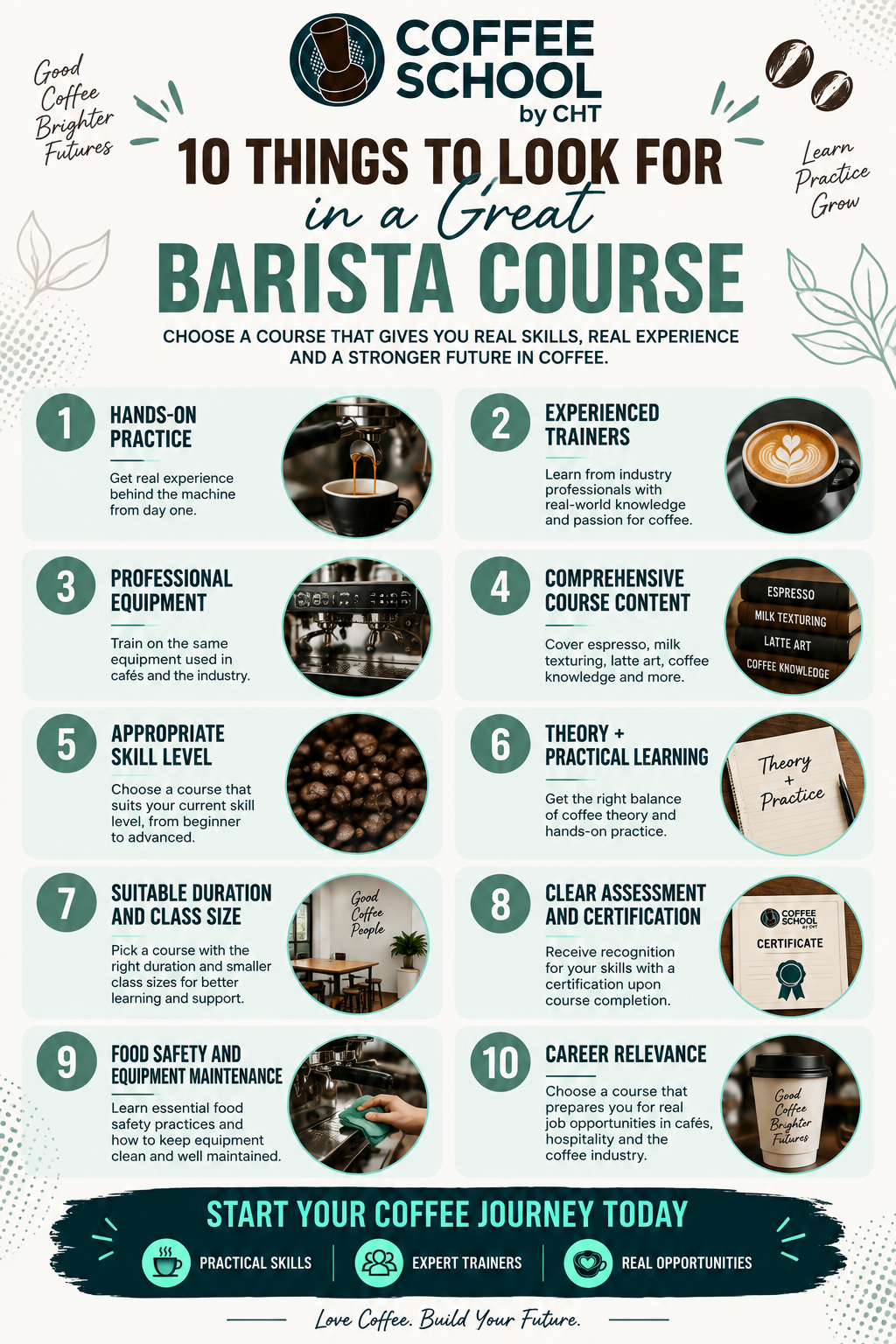
1. Plenty of Hands-on Practice
Watching someone make coffee can show you the process. Doing it yourself is where you begin developing the skill.
Practical training should give you opportunities to load and tamp a group handle, adjust a grinder, pull espresso shots, texture milk and prepare different coffees. Repetition helps you understand what changes when an extraction runs too quickly, or the milk texture is off.
Coffee School's Barista & Coffee Art course provides practical access to machines during its one-day training.
When comparing barista courses in Melbourne, find out how much time you will actually spend making coffee rather than simply watching demonstrations.
2. Experienced and Knowledgeable Trainers
A trainer should be able to demonstrate a technique clearly, explain why it works and provide useful feedback while you practise.
This matters because small changes to grinder adjustment, tamping, milk texture or pouring technique can affect the coffee you produce.
Look for trainers who can connect these skills to real café situations and help you understand what you need to adjust rather than simply giving you a set of steps to memorise.
3. Professional Coffee Equipment
If your goal is to develop café skills, you should have meaningful access to commercial-style equipment.
This can include:
- espresso machines
- commercial coffee grinders
- group handles
- steam wands
- milk jugs and other coffee-making tools.
Different commercial machines can have different controls and workflows. However, the core principles of dosing, extraction, milk texturing and machine care can be applied across many café setups.
The important question is whether you will actually use the equipment during your barista training in Melbourne.
4. A Course that Covers More than Espresso
Espresso is fundamental, but café work involves more than pulling a shot.
Depending on the course, useful skills can include:
- espresso extraction
- grinder adjustment
- dosing and tamping
- milk texturing
- coffee menu preparation
- latte art
- equipment cleaning and maintenance
- food safety.
Coffee School's Barista Master Class combines coffee preparation, grinder adjustment, advanced milk texturing, coffee art, cleaning, and food safety.
If latte art is a particular goal, Coffee School also offers dedicated Latte Art training. Good latte art still starts with the fundamentals, particularly correctly prepared espresso and well-textured milk.
5. Training that Matches Your Experience Level
Beginners and people with existing café experience may need different training.
A beginner may want to focus on grinder operation, espresso preparation, tamping, milk texturing, common menu coffees and equipment cleaning. Someone with experience may want to work on consistency, advanced milk techniques or latte art.
Coffee School also offers a Coffee Appreciation course for students interested in deepening their knowledge of coffee.
Check the course content before enrolling so you choose training suited to your current skills and goals.
6. The Right Balance of Theory and Practical Learning
Understanding concepts such as grind size, dose, extraction and milk texture helps you know why a technique works.
But theory needs to be applied.
A practical coffee course in Melbourne should let you test what you are learning on the equipment. Adjusting the grinder and seeing how that change affects an espresso, for example, makes the theory much easier to connect with real café work.
Looking for practical training? Explore Coffee School's Melbourne courses to compare coffee and hospitality training options for different experience levels and goals.
7. Appropriate Course Duration and Class Size
Course length alone does not determine quality.
Look at how the available time is divided among practical coffee-making, demonstrations, theory, and assessment. A focused short course can still provide useful training when students have enough time on the equipment.
Class size can also affect the amount of individual feedback available, particularly during practical activities.
Instead of only asking how long a course takes, consider how much practical training is included during that time.
8. Clear Assessment and Certification
The term "barista certificate" can mean different things, so check exactly what the course provides.
Before enrolling, check:
- whether the course is accredited or non-accredited
- whether formal assessment is included
- what certificate or Statement of Attainment is issued
- whether any units are nationally recognised.
Coffee School offers both accredited and non-accredited training options.
The Barista Master Class, delivered through Complete Hospitality Training, includes competency-based assessment and nationally recognised Statements of Attainment for the specified units following successful completion.
The Barista & Coffee Art course is non-accredited and currently provides a Certificate of Participation following successful completion.
The right option depends on what you need from your training, so check the individual course rather than assuming every barista certificate represents the same outcome.
9. Equipment Cleaning and Food Safety are Included
Cleaning may not be the first skill that comes to mind when choosing a barista course, but it is part of working with coffee equipment in a commercial environment.
Training can include cleaning espresso machines and grinders, caring for equipment and maintaining appropriate hygiene practices.
Coffee School's Barista Master Class includes cleaning of coffee machines and grinders, as well as food safety training.
These skills help students understand that looking after the equipment and maintaining a clean workspace are part of café work, not separate from making coffee.
10. The Course Supports your Goals
Think about what you want from the training.
Your goal might be:
- preparing for your first hospitality job
- improving existing café skills
- developing confidence with commercial equipment
- learning latte art
- building broader coffee knowledge
- preparing for running a café.
Training can provide a practical foundation, but speed and consistency continue developing through repetition and workplace experience.
Choose a course based on the skills you want to develop rather than simply selecting the quickest option.
Barista Course Comparison Checklist
|
What to Check |
Why it Matters |
| Hands-on practice | Builds practical ability and confidence |
| Experienced trainers | Provides guidance and feedback |
| Professional equipment | Gives you experience with café-style equipment |
| Course content | Ensures important skills are covered |
| Course level | Helps match training to your experience |
| Class size | Can affect individual attention |
| Duration | Affects the time available for learning and practice |
| Assessment | Explains how skills and knowledge are evaluated |
| Certification | Clarifies what recognition you receive |
| Career relevance | Helps match training with your goals |
FAQs About Barista Courses in Melbourne
What should I look for in a barista course in Melbourne?
Look for hands-on training, knowledgeable trainers, professional equipment, relevant course content and a level suited to your experience. Also check the class structure, assessment and certification before enrolling.
How long does a barista course take in Melbourne?
Course duration varies depending on the type and level of training. Coffee School's Melbourne options include its one-day Barista & Coffee Art course and two-day Barista Master Class.
Consider the amount of practical training included rather than judging a course on duration alone.
Do I need previous experience to take a barista course?
Not necessarily. Some courses are designed for beginners and have no prerequisites for previous barista training. Always check the requirements for the individual course before enrolling.
Will I receive a certificate after completing a barista course?
It depends on the course. The type of certificate or nationally recognised outcome should be clearly stated before you enrol. Check the individual course page for the exact certification provided.
Is hands-on practice important when learning to become a barista?
Yes. Repeated practice helps you develop skills such as grinder adjustment, espresso extraction, milk texturing, and coffee preparation, while learning to recognise when adjustments are needed.
Should I choose an accredited barista course?
Choose based on your goals. If you need nationally recognised training, check the specific accredited units and Statements of Attainment offered. If your main goal is practical skill development, a non-accredited course may also suit your needs.
Find the Right Barista Training for you
A good course should combine practical experience, knowledgeable instruction, professional equipment, and coffee skills that align with what you want to achieve.
Coffee School offers a range of barista courses in Melbourne for different training goals and experience levels.
If you're ready to build your skills behind the machine, view upcoming course dates and compare the available Coffee School training options.