


A barista certificate is often the first step towards a career in the coffee industry. It demonstrates that you've invested time in learning the fundamentals and are serious about working in hospitality.
However, many new baristas are surprised to learn that a certificate alone is rarely enough to secure a job.
Australia's café industry is highly competitive, and employers are often looking for candidates who can contribute from day one. While qualifications are important, practical ability, customer service skills and workplace attitude can be just as valuable.
If you're considering getting your barista certification, it's important to understand what employers look for beyond qualifications alone.
Is a Barista Certificate Enough to Get a Job?
No, a barista certificate alone is rarely enough to get a job.
Most café owners and hospitality managers also look for practical coffee-making skills, customer service ability, reliability, teamwork and confidence in a fast-paced environment. While certification demonstrates formal training, employers often want to see whether you can prepare quality coffee and perform well during a trial shift.
For many job seekers, combining a certificate with hands-on barista training provides the strongest foundation for employment.
What Skills Do Employers Look for in Baristas?
Employers typically look for:
- Practical coffee-making skills
- Milk texturing and latte art ability
- Customer service skills
- Reliability and punctuality
- Teamwork and communication
- Confidence under pressure
- A willingness to learn
While a barista certificate demonstrates training, employers often hire candidates who can combine technical skills with a professional attitude and strong customer service.
Why a Barista Certificate Still Matters
A barista certificate still carries significant value, particularly for people entering the industry for the first time.
It shows employers that you have taken the initiative to learn the basics of coffee preparation, espresso extraction, milk texturing and café operations. It also demonstrates commitment to the hospitality industry and a willingness to invest in developing professional skills.
For many employers, a certificate serves as evidence that a candidate has received structured training rather than relying solely on self-taught experience.
However, most café managers understand that completing a course is only the beginning of a barista's development.
Practical Coffee Skills Matter Most
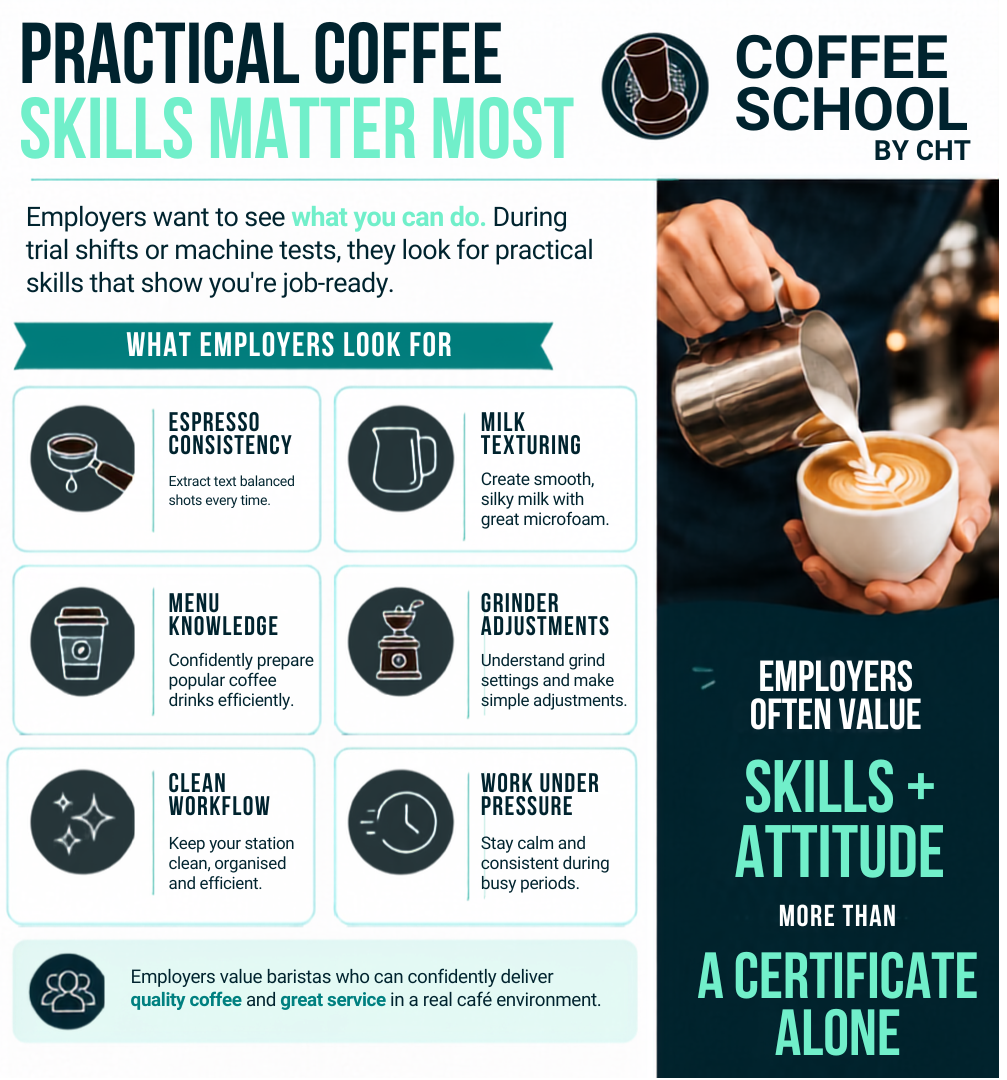
When employers interview potential baristas, they are often more interested in what you can do than what certificate you hold.
Many cafés will ask candidates to complete a trial shift or demonstrate their skills on a coffee machine. During these assessments, employers are looking for practical abilities such as:
- Extracting consistent espresso shots
- Texturing silky milk correctly
- Preparing popular menu items efficiently
- Adjusting grinder settings when required
- Maintaining cleanliness and workflow
- Working confidently under pressure
A candidate who can confidently prepare a quality coffee is often viewed more favourably than someone who simply presents a certificate without practical experience.
This is why hands-on learning is such an important part of developing job-ready skills. A quality barista training course allows students to spend time operating commercial equipment, practising milk texturing and preparing a wide range of drinks in a realistic environment.
Great coffee gets customers in, great service brings them back
Technical coffee skills are only part of the job.
Baristas spend much of their day interacting with customers, taking orders, answering questions and creating a welcoming atmosphere. As a result, customer service skills are often just as important as coffee-making ability.
Employers commonly look for people who can:
- Communicate clearly
- Remain friendly during busy periods
- Handle customer concerns professionally
- Work well with team members
- Create positive customer experiences
A perfectly poured latte is valuable, but a customer is far more likely to return if they receive both great coffee and excellent service.
For many café owners, personality and communication skills can be the deciding factor when choosing between applicants with similar technical abilities.
Reliability and workplace attitude
One of the biggest factors employers consider is reliability.
Hospitality businesses operate on tight schedules and depend on staff arriving on time, completing tasks consistently and supporting the wider team.
Even highly skilled baristas can struggle to maintain employment if they are unreliable or difficult to work with.
Employers often prioritise candidates who demonstrate:
- Punctuality
- Professionalism
- A positive attitude
- Willingness to learn
- Strong teamwork skills
- Adaptability during busy shifts
These qualities are difficult to teach but can have a significant impact on long-term success in the industry.
Many café managers would rather hire someone with a great attitude and solid foundational skills than someone with advanced coffee knowledge but poor workplace habits.
Speed, efficiency and confidence
Working in a busy café can be very different from making coffee at home.
During peak periods, baristas may need to manage multiple orders simultaneously while maintaining consistency and quality.
Employers often assess whether candidates can:
- Stay organised under pressure
- Prioritise tasks effectively
- Maintain quality during busy service periods
- Work efficiently without becoming flustered
- Communicate clearly with colleagues
These skills typically develop through practice and repetition.
The more experience a candidate has operating equipment, preparing drinks and working within realistic service scenarios, the more confident they are likely to be when stepping into a café environment.
Why employers look for more than technical ability
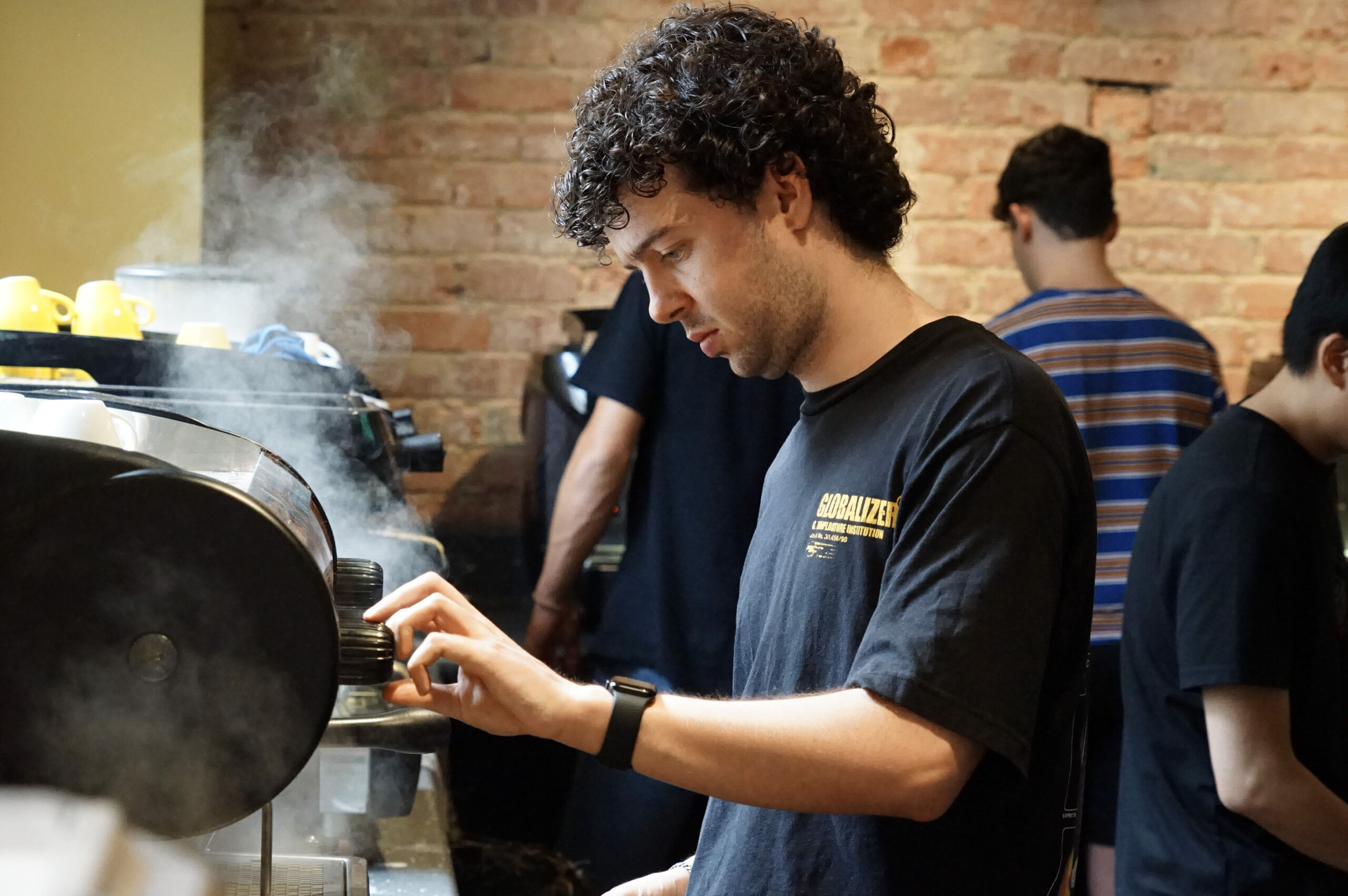
The best baristas combine technical skills with strong workplace habits.
Think about the qualities that make your favourite café memorable. While the coffee is important, customers also remember friendly staff, efficient service and a welcoming atmosphere.
Employers understand this connection.
A successful barista is often someone who can balance multiple responsibilities at once, including preparing drinks, interacting with customers, maintaining cleanliness and supporting other team members.
For this reason, hiring decisions are usually based on a combination of skills rather than any single qualification.
How barista training helps build employability
A structured training program can help bridge the gap between holding a certificate and becoming job-ready.
Quality training focuses on developing practical experience, confidence and consistency while exposing students to the expectations of a professional café environment.
Those who are interested in building practical barista skills often find that hands-on training helps them become more comfortable operating equipment, preparing drinks efficiently and handling real-world service situations.
Training also provides opportunities to receive feedback, correct mistakes and refine techniques before entering the workforce.
As confidence grows, candidates are often better prepared for job interviews, trial shifts and the fast-paced nature of hospitality work.
This can be particularly valuable in an industry that continues to provide significant employment opportunities. According to Jobs and Skills Australia, cafés, restaurants and takeaway food services employ almost 700,000 Australians, making them the largest sector within the Accommodation and Food Services industry. With bar attendants and baristas among the industry's largest occupation groups, candidates who can demonstrate practical skills alongside a barista certificate are often better positioned when applying for jobs.
How Can You Improve Your Chances of Getting Hired as a Barista?
If you're looking to improve your chances of securing a café job, employers generally value candidates who can demonstrate both practical skills and workplace readiness.
To become a stronger applicant:
- Complete barista training to build foundational coffee-making skills
- Practise preparing coffees regularly to improve speed and consistency
- Develop strong customer service and communication skills
- Gain confidence working with commercial coffee equipment
- Perform well during trial shifts by staying calm under pressure
- Demonstrate reliability, professionalism and a willingness to learn
While a barista certificate can help open doors, employers are often looking for candidates who can confidently apply their skills in a real café environment and contribute positively to the team.
Turning a certificate into a job opportunity
A barista certificate can open doors, but it is rarely the only factor employers consider.
Most cafés are looking for individuals who can combine technical coffee-making skills with strong customer service, reliability, teamwork and a positive attitude.
The good news is that many of these qualities can be developed through experience, practice and structured learning.
If you're serious about getting a job in the coffee industry, investing in practical training can help you build the confidence and real-world skills employers value most.
A comprehensive barista course can provide the foundation needed to move beyond certification and become a stronger candidate when opportunities arise.