
Ever watched a barista prepare a perfect latte with a rosetta (fern/leaf) print on top and wondered how they make it look so easy?
From getting the espresso just right to creating smooth, silky milk, there's more skill involved than you might think. And while pouring a beautiful rosetta might seem difficult, every experienced barista had to start somewhere.
With the right guidance and a little practice, you can learn these techniques too. A hands-on barista course gives you the opportunity to work with commercial coffee equipment, understand how different coffees are made and try your hand at latte art, even if you've never used a coffee machine before.
Getting the Eespresso Extraction Right
Every good flat white, latte and cappuccino starts with a properly prepared espresso shot. If the espresso tastes bitter, sour or weak, adding milk won't necessarily fix it.
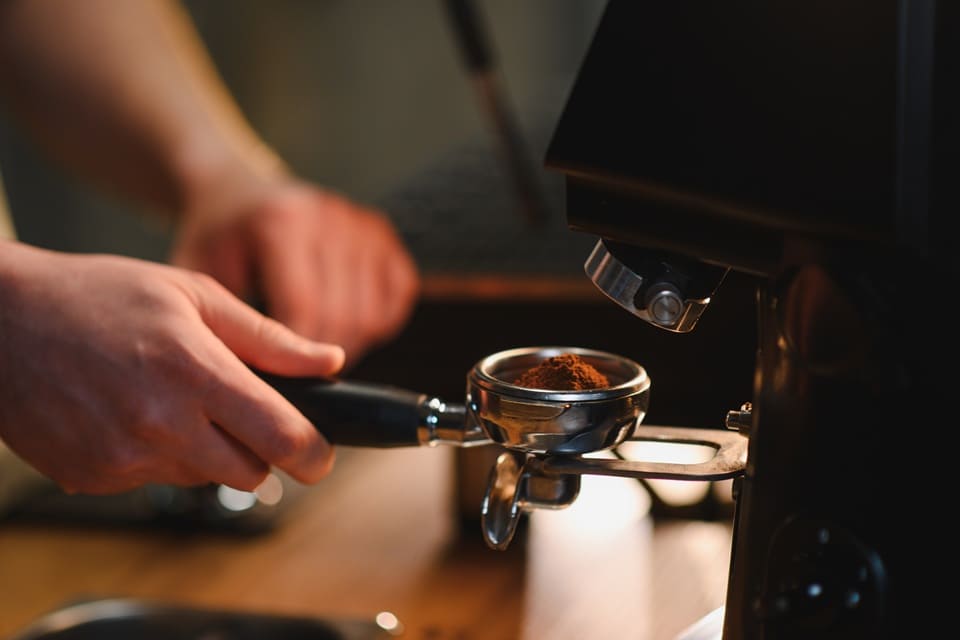
During barista training, you'll learn how to use a commercial coffee machine and grinder to prepare espresso. Four important factors influence the result:
- Grind size: How finely or coarsely the beans are ground affects how quickly water passes through the coffee.
- Dose: The amount of ground coffee placed in the portafilter influences the strength and balance of the espresso.
- Tamping: Pressing the coffee evenly helps create a level coffee bed for extraction.
- Extraction time: How long water passes through the coffee affects the flavours extracted into the cup.
But what happens when something goes wrong?
Imagine you're preparing an espresso and notice the coffee pouring much faster than expected. The shot looks pale and tastes weak or sour.
One possible cause is that the grind is too coarse, allowing water to pass through too quickly. Adjusting the grinder to produce a finer grind may help improve the result.
If the coffee flows too slowly and tastes overly bitter, the grind may be too fine. However, dose, preparation and the coffee itself can also affect extraction.
Recognising these problems helps you understand what to check when your coffee doesn't turn out as expected.
Learning How to Texture Milk Properly

Have you ever ordered a flat white and received a cup with a thick layer of foam sitting on top? Or had a latte where the milk felt thin and watery?
For the Barista and the customer, milk texture makes a noticeable difference to how a coffee tastes and feels.
For milk-based coffees, baristas use a steam wand to heat the milk and introduce small amounts of air. The aim is to create a smooth, glossy texture with fine bubbles, known as microfoam.
Getting the texture right involves controlling how much air enters the milk, how it moves inside the jug and when to stop steaming.
At the beginning, the steam wand introduces air near the milk's surface. Too much creates large bubbles and stiff foam, while too little leaves the milk thin.
As the milk warms, rolling it helps distribute the air evenly. The result should be smooth and glossy, without large bubbles.
Temperature matters too. Overheated milk can develop an unpleasant cooked flavour, so knowing when to stop is just as important as knowing how to start.
You'll also discover how milk preparation differs between popular café drinks. A cappuccino traditionally has more foam than a flat white, while a latte generally has a smooth, creamy texture.
Learning the Basics of Latte Art
There's something satisfying about watching a barista finish a coffee with a perfectly poured heart. It's even more satisfying when you're the one holding the milk jug.
Latte art might look complicated, but beginners can start with simple designs before moving on to more detailed patterns.
The technique involves controlling the height, angle and movement of the jug as you pour steamed milk into espresso.
Pouring from higher above the cup helps the milk flow beneath the espresso's surface. Bringing the jug closer allows the white microfoam to appear on top, creating the contrast needed for a pattern.
A basic heart is often one of the first designs you'll practise:
1. Start with a steady pour to combine the espresso and milk.
2. Lower the jug closer to the surface as the cup fills.
3. Allow the white foam to form a rounded shape.
4. Finish with a controlled movement through the centre to create the heart.
Don't be surprised if your first heart looks more like a cloud. Getting the milk to move exactly where you want it takes coordination, but that's part of the fun of learning latte art.
Bringing Your Barista Skills Together in a Cafe


Picture yourself behind the coffee machine during a busy morning. Someone orders a flat white, another customer wants a cappuccino, and a third asks for a latte.
Suddenly, knowing how to make each coffee is only part of the job. You also need to keep your workspace organised, manage your equipment and prepare drinks without losing track of orders.
Good café habits include:
- Checking espresso quality and adjusting the grinder when needed.
- Preparing different coffee styles correctly.
- Cleaning the portafilter and steam wand between uses.
- Keeping your workspace organised as orders come in.
- Maintaining consistent drink quality during busy periods.
Working efficiently takes experience, but understanding these habits gives you a useful foundation for working in a café.
What Can You Expect from a Barista Course at Coffee School?
At Coffee School's Barista & Coffee Art course in Sydney, students have access to their own commercial coffee machine during training.
You'll practise preparing espresso, steaming milk and pouring latte art, with guidance to help you improve your technique.
If you're considering café work, this gives you an opportunity to become familiar with the equipment before applying for your first role.
Ready to Make Your First Coffee?
If you've been thinking about learning to make coffee, why not give it a go?
Whether you're hoping to land your first café job, explore a new skill or simply enjoy making coffee, there's something rewarding about preparing a great cup yourself.
You don't need to know your way around a commercial coffee machine before attending. Coffee School welcomes beginners who are curious about coffee and keen to give it a try.
Explore Coffee School's Barista &
, check the available training dates and book a session that suits you.