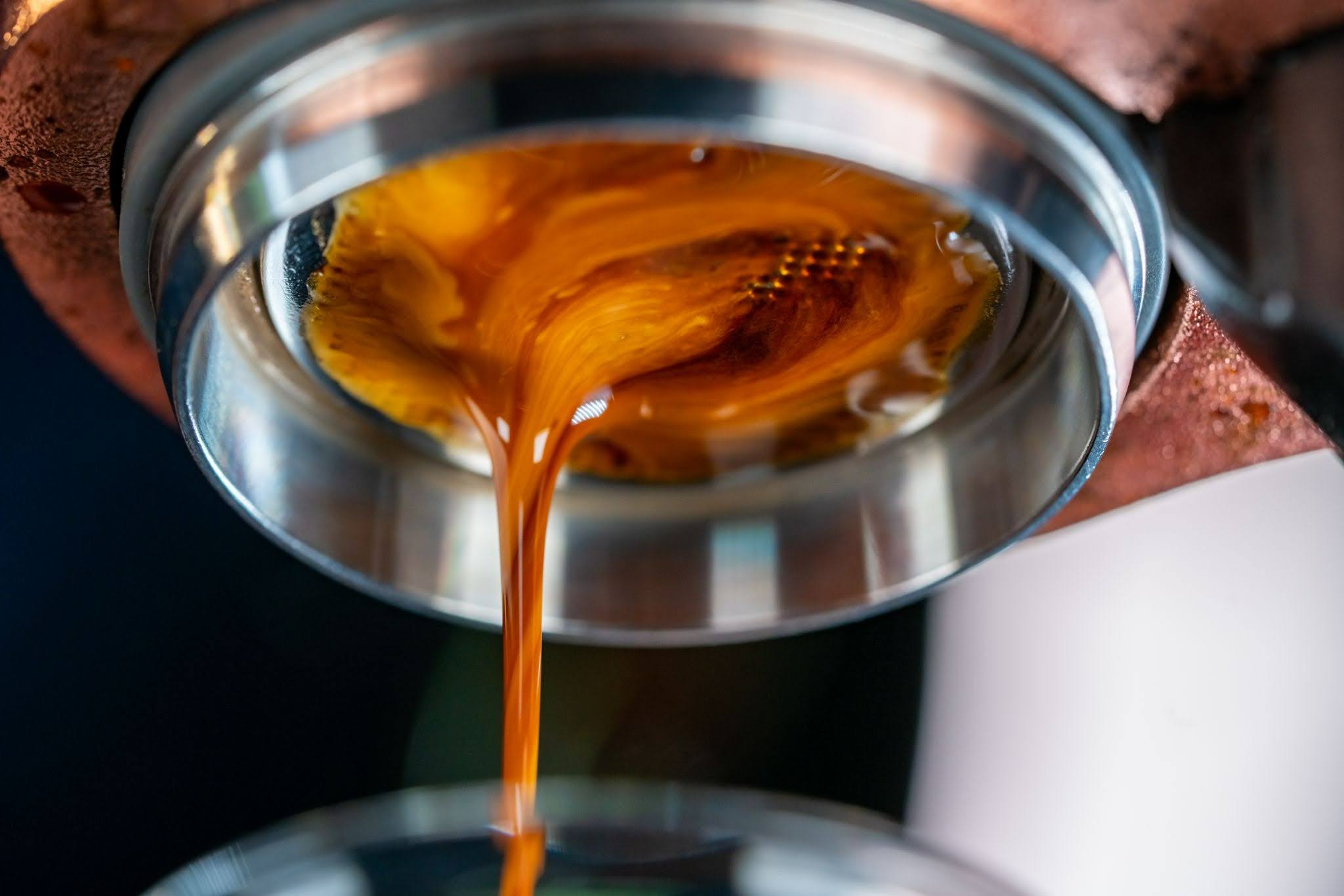

An espresso shot gives you clues from the moment it starts flowing. The time it takes, the amount of espresso produced, the colour, crema and way the stream develops can all help you understand what is happening during extraction.
But no single clue tells the whole story. A shot that runs for 28 seconds is not automatically good, just as pale crema does not automatically mean something has gone wrong.
Learning to read espresso means looking at time, yield, appearance and taste together, then making small adjustments when needed.
How to Read An Espresso Shot
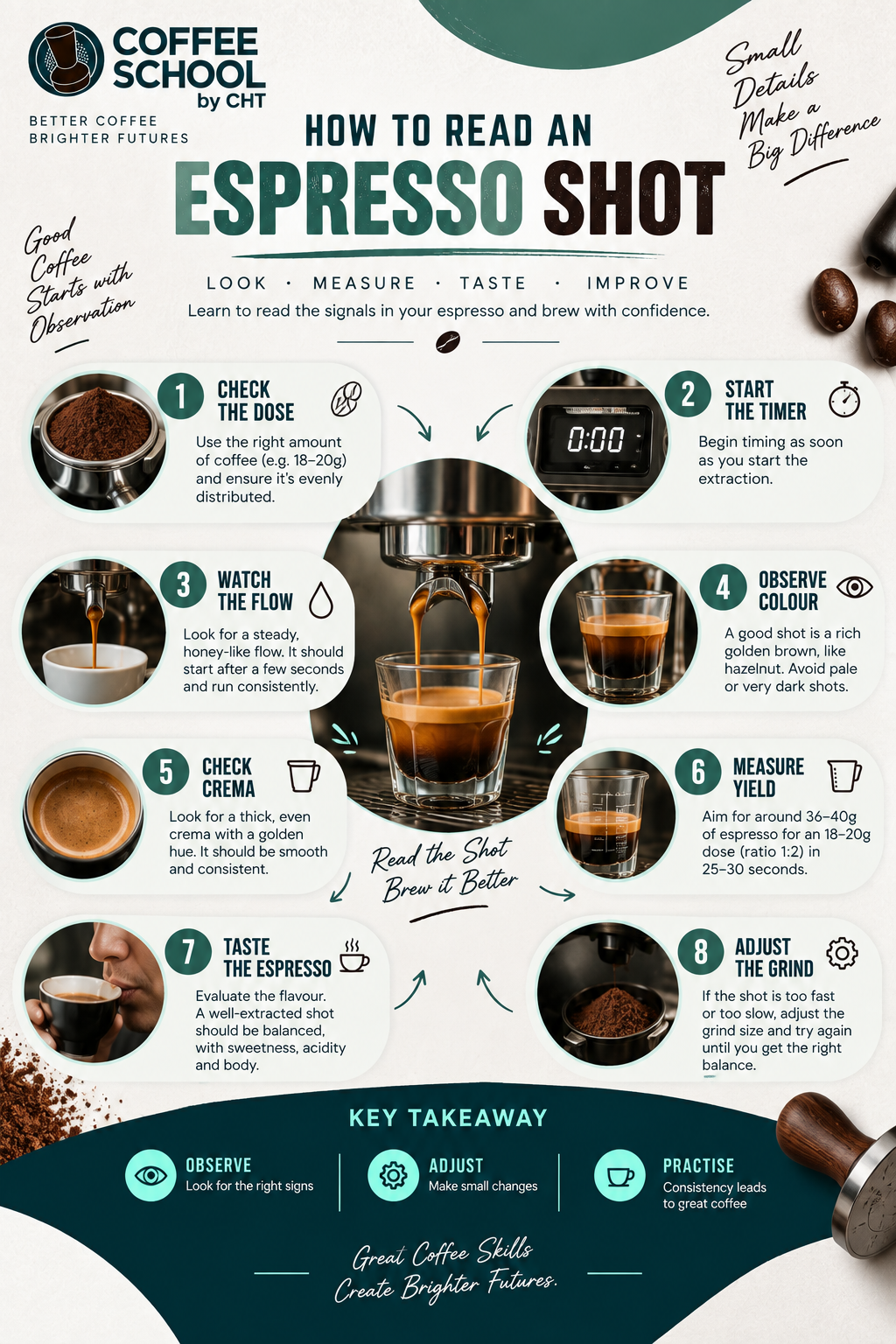
A useful starting point for an espresso shot is around 25–30 seconds of extraction with a brew ratio of approximately 1:2, such as 18g of coffee producing 36g of espresso. However, the ideal espresso shot time and yield can vary depending on the coffee, grinder, machine and recipe. Crema, colour, flow and taste should be assessed together.
Here is what to watch as your espresso extracts.
1. Start With Time and Yield
Time tells you how long the extraction takes. Yield tells you how much espresso you have produced, measured by weight.
For example: 18g coffee dose → approximately 36g espresso = 1:2 brew ratio
Around 25–30 seconds is commonly used as a starting point for this type of recipe, but it is not a rule that every espresso needs to follow.
A very fast shot can indicate that water is moving through the coffee too easily. A very slow shot can indicate greater resistance.
The ideal espresso shot time and yield depends on the coffee, grinder, espresso machine and flavour you are trying to achieve, so timing makes more sense when considered alongside yield and taste.
2. Look at the Crema
Crema is the layer that forms on top of freshly extracted espresso. Its colour, thickness, texture and persistence can provide visual information about the shot.
It is useful information, but crema is not a quality score.
A thick or dark crema does not automatically mean an espresso is well extracted. Likewise, lighter or thinner crema does not necessarily mean the coffee will taste poor.
Treat crema as one clue and consider it alongside the shot's timing, flow, yield and flavour.
3. Watch the Colour Change
Espresso does not usually remain the same colour throughout extraction.
The initial flow may appear darker before developing into richer brown tones. Towards the end of extraction, the stream commonly becomes lighter.
This lightening is often called blonding.
Watching when and how the colour changes can help you understand how the extraction is progressing. However, there is no single colour at which every espresso shot should be stopped.
Different coffees and recipes behave differently, so colour needs context.
4. Watch the Flow
The way espresso leaves the group handle can provide another useful clue.
You might see initial drops followed by a more established stream that changes as the extraction progresses.
If the espresso suddenly runs very quickly, appears unusually thin or flows unevenly, possible causes can include:
- grind size
- dose
- uneven distribution
- tamping
- channelling.
Channelling occurs when water finds easier paths through parts of the coffee puck instead of flowing evenly through the coffee.
Learning to recognise these changes is one reason practical barista training can be useful. You can observe the extraction, taste the result and see what happens after making an adjustment.
5. What Does An Under-extracted Shot Look Like?
Under-extracted espresso can sometimes run quickly, appear pale or thin and begin blonding relatively early.
In the cup, you may notice:
- sourness
- sharp acidity
- weak or thin body.
These are clues rather than a diagnosis. Taste the espresso before deciding what needs to change.
If the grind is too coarse, making it slightly finer can increase resistance and slow the extraction. Make small adjustments rather than changing several variables at once.
6. What Does An Over-extracted Shot Look Like?
Possible signs at the other end include a very slow flow or an extraction that continues considerably longer than expected.
Taste can include:
- excessive bitterness
- dryness
- astringency
- a harsh finish.
Again, timing alone does not prove that an espresso is over-extracted.
If grind size is creating too much resistance, moving slightly coarser may allow water to flow through the puck more easily. Taste the next shot and compare the result.
7. How Grind Size Affects Espresso Timing
Grind size has a major influence on how quickly water can move through the coffee puck.
A finer grind generally:
- increases resistance
- slows the flow
- can increase extraction.
A coarser grind generally:
- reduces resistance
- speeds up the flow
- can reduce extraction.
This is why grinder adjustment is such an important barista skill.
If a shot is running too quickly or slowly, the grinder is often one of the first variables to check, while keeping the rest of the recipe as consistent as possible.
Coffee School's Barista & Coffee Art course includes practical work with coffee machines and grinders, while the Barista Master Class provides more extensive practical coffee training.
8. Don't Ignore Dose, Distribution and Tamping
Grind size is important, but it is not the only variable affecting an espresso shot.
Your dose should be consistent, and the coffee needs to be distributed evenly in the portafilter before tamping.
If the coffee bed is uneven, water can find areas of less resistance. This can contribute to channelling and inconsistent extraction.
Before repeatedly changing your grinder, check that your dose and puck preparation are consistent.
9. Taste is the Final Test
Numbers and visual cues help you understand an extraction, but ultimately the espresso needs to be tasted.
Consider:
- acidity
- sweetness
- bitterness
- body
- balance
- aftertaste.
Two shots can have similar extraction times and yields but taste different because the coffees, roast levels, freshness or recipes differ.
This is why espresso should not be reduced to hitting one number on a timer.
10. Practise Reading Shots in a Barista Class
Understanding extraction becomes easier when you can repeat the process.
In a practical barista class, students can work through steps such as dosing coffee, adjusting the grinder, preparing the puck, pulling shots, timing extraction and observing the flow.
They can then taste the espresso, make an adjustment and see what changes.
That repetition helps connect numbers such as dose, time and yield with what you can actually see and taste in the cup.
If you want to develop broader coffee knowledge alongside practical skills, Coffee School also offers Coffee Appreciation training.
Quick Espresso Troubleshooting Guide
|
What You Notice |
Possible Cause |
What to Check |
| Shot runs very quickly | Grind may be too coarse | Adjust grind finer |
| Shot runs very slowly | Grind may be too fine | Adjust grind coarser |
| Uneven or spurting flow | Possible channelling | Check distribution and tamping |
| Sour or sharp flavour | Possible under-extraction | Check grind, dose and yield |
| Bitter or dry flavour | Possible over-extraction | Check grind, time and recipe |
| Thin crema | Could relate to coffee freshness or extraction | Check coffee age and preparation |
| Pale flow develops quickly | Extraction may be progressing quickly | Check grind and puck preparation |
These are starting points rather than universal rules. Coffee characteristics, equipment and, most importantly, taste should guide your adjustments.
FAQs About Espresso Extraction
What is the ideal espresso shot time and yield?
A common starting point is around 25–30 seconds with approximately a 1:2 brew ratio. For example, an 18g dose might produce around 36g of espresso. The ideal recipe varies depending on the coffee, equipment and desired result.
What does crema tell you about an espresso shot?
Crema provides visual clues about the espresso, including colour, texture and persistence. It should be assessed alongside time, yield, flow and taste rather than used as a standalone measure of quality.
Why does my espresso shot run too quickly?
Possible causes include a grind that is too coarse, inconsistent dosing, uneven distribution or channelling. Check your preparation and adjust one variable at a time.
Why does my espresso shot take too long?
A very slow shot may be associated with a grind that is too fine or excessive resistance in the coffee puck. Check grind size, dose and puck preparation before making an adjustment.
What colour should a good espresso shot be?
Espresso commonly starts darker and becomes lighter as extraction progresses. There is no single colour that proves an espresso is good, so assess colour alongside timing, yield and taste.
Is crema a sign of good espresso?
Not by itself. Crema is a normal characteristic of espresso, but its presence, colour or thickness cannot determine extraction quality on its own.
Can a barista class teach me how to dial in espresso?
A practical class can help you understand how grind size, dose, extraction time and yield interact by giving you opportunities to make espresso, observe the result and practise making adjustments.
Build Your Espresso Skills Through Practice
Reading an espresso shot is about more than watching the timer. Crema, colour, flow, time and yield can all provide useful information, but taste gives those clues context.
If you want to practise these skills using commercial coffee equipment, explore Coffee School's barista training or enquire about a course.