
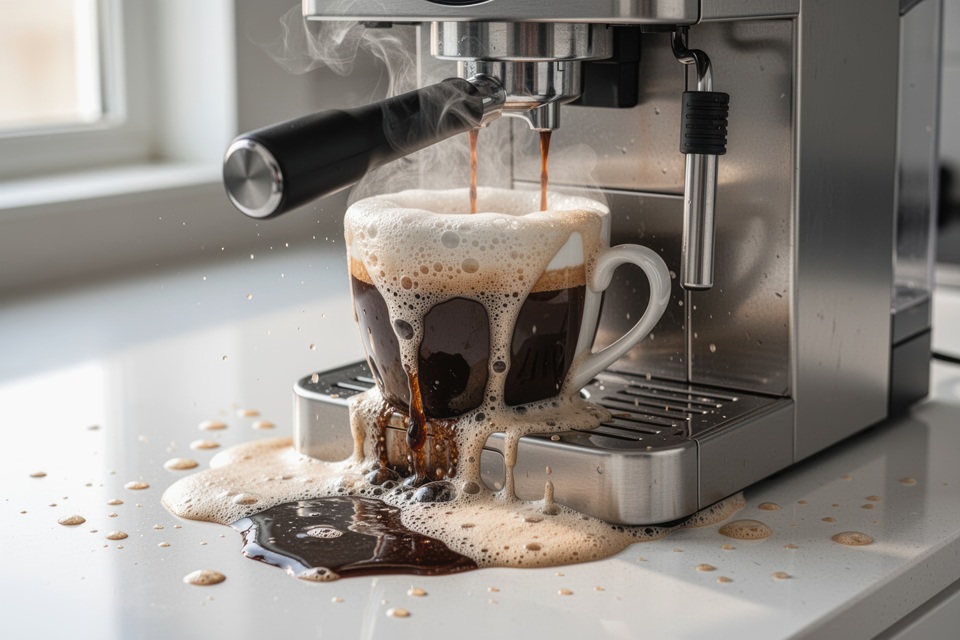

Pulling the perfect espresso shot looks simple, but in reality, it’s one of the hardest skills for new baristas to master.
If your espresso tastes sour, bitter, weak or inconsistent, something in your extraction process is off. The good news is that most espresso problems come down to a few common mistakes that are easy to fix once you know what to look for.
A Quick Answer
Espresso extraction usually fails because of incorrect grind size, poor dosing, uneven tamping, unstable temperature, bad water quality or lack of consistency in technique.
What “good extraction” Actually Looks Like
Before fixing mistakes, it helps to understand what you’re aiming for.
A well-extracted espresso should:
- Run for around 25–30 seconds
- Flow smoothly like warm honey
- Have a balanced flavour (not sour or overly bitter)
- Produce a rich crema
If your shots don’t match this, one of the following issues is likely the cause.
1. Incorrect Grind Size
The problem
Grind size is the most common reason espresso extraction fails.
- Too coarse → fast flow, weak, sour espresso
- Too fine → slow flow, bitter, harsh espresso
Why it happens
- Using pre-ground coffee
- Not adjusting for different beans
- Inconsistent grinder settings
How to fix itgrind size affects flavour
- Use a burr grinder for consistency
- Adjust grind based on shot timing
- Aim for a 25–30 second extraction
Learning how grind size affects flavour is one of the first skills developed in structured barista training, as it directly controls how water interacts with the coffee.
2. Incorrect Coffee Dose
The problem
Using too much or too little coffee throws off the entire extraction.
- Too little → thin, watery shot
- Too much → restricted flow, over-extraction
Why it happens
- Guessing instead of measuring
- Using scoops instead of scales
- Not adjusting for basket size
How to fix it
- Use scales for consistency
- Start with 18–20g for a double shot
- Adjust dose alongside grind size
Dialling in dose correctly is one of the most important steps in achieving consistency, especially when working in a fast-paced café environment.
3. UnevenTamping and Distribution
The problem
If the coffee puck isn’t even, water will flow unevenly through it. This causes channeling, where some parts are over-extracted and others under-extracted.
Why it happens
- Uneven distribution before tamping
- Tilting the tamper
- Inconsistent pressure
How to fix it
- Level the coffee before tamping
- Apply firm, even pressure
- Keep the tamper straight
This is a common issue beginners face, especially when working on milk-based drinks where small mistakes can affect overall quality, similar to the challenges seen in common latte art mistakes.
4. Poor Water Quality
The problem
Water makes up most of your espresso, so poor quality water directly impacts taste and machine performance.
Why it happens
- Using unfiltered tap water
- High mineral content causing scale
- Very soft water flattening flavour
How to fix it
- Use filtered water
- Maintain balanced mineral levels
- Descale your machine regularly
Water quality is often overlooked, but it plays a major role in consistency across multiple shots.
5. Incorrect Extraction Time
The problem
Timing is one of the clearest indicators of extraction quality.
- Too fast (<20 seconds) → under-extracted, sour
- Too slow (>35 seconds) → over-extracted, bitter
Why it happens
- Wrong grind size
- Incorrect dose
- Inconsistent tamping
How to fix it
- Use a timer for every shot
- Adjust grind and dose to control flow
- Watch how the espresso pours, not just the clock
Understanding how timing affects flavour is essential when learning how to balance speed and consistency during service.
6. Not Preheating Your Equipment
The problem
Cold equipment lowers brewing temperature, which affects extraction and flavour.
Why it happens
- Skipping machine warm-up
- Cold portafilter or cups
How to fix it
- Let the machine heat up for at least 10–15 minutes
- Run a blank shot before brewing
- Preheat cups with hot water
Temperature stability is one of the biggest differences between home setups and professional café environments.
7. Poor Machine Maintenance
The problem
Old coffee oils, residue and scale build-up can ruin flavour and affect performance.
Why it happens
- Infrequent cleaning
- Skipping backflushing
- Ignoring descaling
How to fix it
- Clean the group head regularly
- Backflush your machine weekly
- Descale as recommended
Maintaining equipment properly is just as important as learning espresso techniques, especially when working with commercial machines.
Small Mistakes Add Up Quickly
One mistake might not completely ruin your espresso, but multiple small issues combined will.
For example:
- Slightly wrong grind + uneven tamp + cold machine = poor extraction
Fixing espresso is about isolating variables and adjusting one thing at a time.
Final Thoughts
Espresso extraction isn’t about complicated techniques. It comes down to consistency across a few key variables.
Once you understand grind size, dose, timing and temperature, everything starts to fall into place.
Most importantly, these are all practical skills that improve quickly with hands-on experience. With the right approach, even beginners can learn to produce consistent, high-quality espresso in a relatively short time.