
Starting out in hospitality, there's a lot coming at you at once: orders stacking up, milk on the go, someone asking for oat on bar two. The last thing you want at that moment is to be uncertain about something you should already know. Having a solid espresso machine cleaning routine memorised before a busy shift means one less thing to figure out under pressure. You know the order, you know the steps, and you can move through them without stopping to think. That confidence comes from repetition. And repetition starts with understanding why the routine exists.
What Builds Up After Every Shot
Commercial espresso machines accumulate two types of residue that affect both flavour and hygiene: oxidised coffee oils on the group head and shower screen, and milk protein on the steam wand. If the coffee oils are left on brewing surfaces, they begin to degrade quickly and affect extraction quality. Milk protein breaks down within minutes on a warm surface, which is why the cleaning order starts there, not at the group head.
The Order That Makes Sense
Start with the steam wand.
Purge it immediately after every milk use throughout the shift, a short burst to push residual milk out of the tip before it dries. At the end of service, wipe the wand, soak the tip in hot water for five minutes, then purge again. Allergy & Anaphylaxis Australia identifies milk residue on steam wands as a cross-contamination risk, which is why this step doesn't get skipped even on a hard close.
Move to portafilters and baskets.
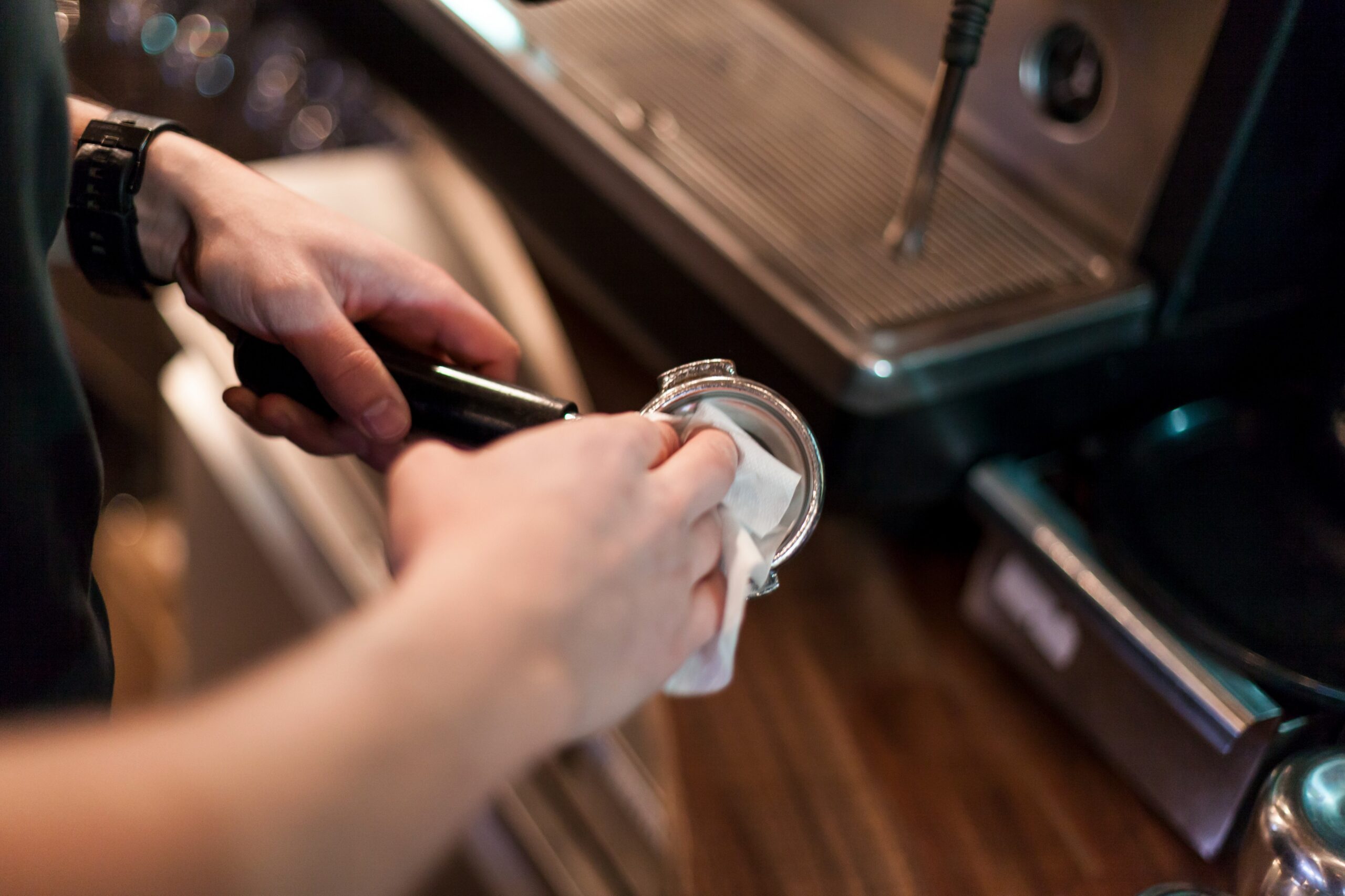
Knock out grounds, rinse, then soak in hot water with espresso machine cleaning powder. Twenty minutes is enough for a standard soak. Scrub with a stiff brush, rinse until no residue remains, and dry before putting anything back.
Finish with the group heads.
This is where the backflush happens. Fit a blind filter (no holes) into the portafilter, add around 1g of cleaning powder per group, and run short cycles — 10 seconds on, 10 off, eight to ten times. It forces water back through the system and flushes out the oxidised oils sitting in the group head. Follow with several clean water cycles before the machine is used again. Note that backflushing only works on machines with a solenoid valve. If you're still getting familiar with commercial equipment, this is worth knowing before your first close.
The reason you backflush last is simple: you don't want chemical residue ending up on equipment you've already cleaned. The end-of-service order runs like this:
- Steam wand purged and tip soaked
- Portafilters and baskets soaked and scrubbed
- Group heads backflushed with cleaning powder, then rinsed clean
The Honest Part About End-of-Night Cleaning
A complete espresso machine cleaning routine at the end of service takes 35 to 40 minutes — closing rosters rarely build that in. The backflush alone is 10 to 12 minutes per group head when run through the correct number of cycles.
What gets cut is usually the portafilter soak, as a quick rinse feels like enough after a long shift, and the machine looks fine the next morning. But after three or four days, coffee oil residue starts affecting shot flavour in ways that are hard to trace. The extraction looks normal, the grind hasn't changed, and the taste is just slightly off. The group head backflush doesn't get shortened. Everything else has a little more flex.
Shower Screens, Gaskets and Descaling
Weekly maintenance on a commercial espresso machine means removing and soaking the shower screen and group head gasket, the rubber seal that sits between the group and the portafilter. Check the gasket while it's out. If it's hardened or cracked, it'll affect extraction pressure and lead to uneven water distribution throughout the puck.
Frequently Asked Questions
- How often should a commercial espresso machine be backflushed?
Daily, at the end of each service. High-volume machines pulling 80-plus shots a day may benefit from a mid-service purge without chemicals. - Can you backflush any espresso machine?
No. Only machines with a solenoid valve can be backflushed. Machines without one require manual removal and scrubbing of the shower screen every two to three days. - What cleaning powder should you use?
Cafetto Espresso Clean and Puly Caff are the standard options in Australian commercial kitchens. Both break down coffee oils without damaging machine components. Don't substitute dishwashing detergent. - What is descaling?
Descaling removes calcium and magnesium deposits that form in the boiler from tap water. Industry practice is to schedule it monthly for commercial machines, though local water hardness affects how often it's needed. - Does the cleaning routine change between machine brands?
The core steps are consistent across commercial espresso machines. Cycle counts and dose amounts can vary by model, so always check the machine's manual when starting at a new venue.
What a Routine Can't Fix
Boiler scale, worn O-rings, and failing solenoids aren't visible from the outside and can't be addressed with cleaning powder. A recent episode of the SCA's Coffee Technicians Guild podcast covers why periodic professional servicing sits outside what daily cleaning can achieve, since internal components need hands-on inspection to catch wear before it becomes a fault.
The drip tray and knockbox are a different category: simple, daily, and easy to skip at the end of a long close. A knockbox left in a warm kitchen for 48 hours grows mould. Both need to be emptied and rinsed every day.
Train Here Before the Venue Gets Busy
Coffee School's barista courses cover machine hygiene on commercial equipment as part of hands-on training. Heading into your shift with the routine already memorised means you're focused on the shot, not on learning the machine. View the coffee course options at our training facilities in Sydney and Melbourne.