
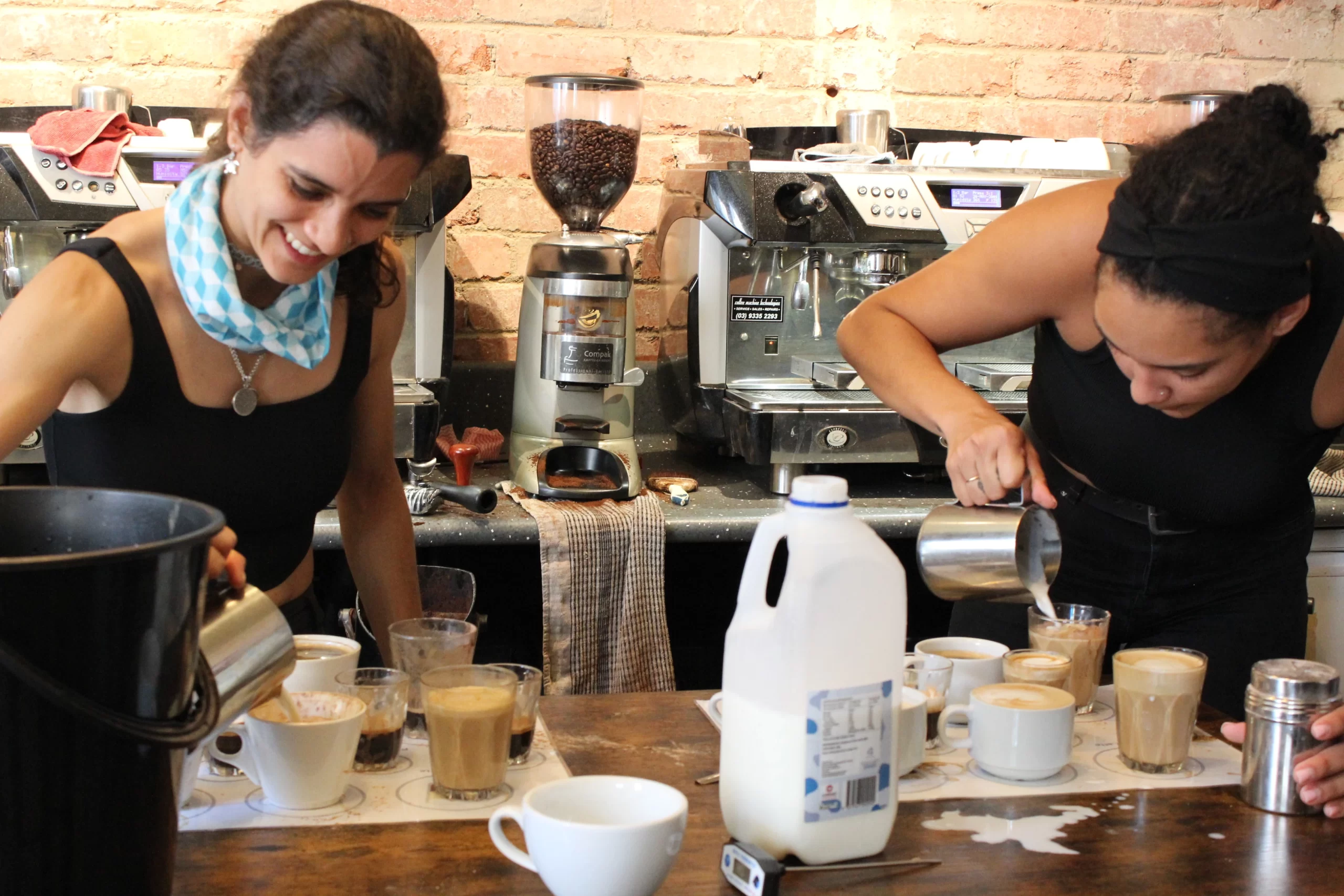

Watch a skilled barista steam oat milk, and you'll notice they barely adjust their technique from dairy. Switch to almond milk, and suddenly they're more cautious: gentler with the steam, stopping earlier, checking texture twice. The milk choice changes every movement at the machine, yet most coffee training focuses on patterns rather than the science underneath.
Different milk types don't just change flavour profiles. They alter foam stability, steaming temperature limits, and pour behaviour in ways that can make or break even experienced baristas' latte art. Understanding these differences enables you to transform unpredictable results into a consistent technique, whether you're working with full-cream dairy or navigating the growing range of plant-based alternatives.
The Science Behind Perfect Microfoam
Creating beautiful latte art depends entirely on understanding milk science and achieving perfect microfoam texture. Milk proteins (casein and whey) create a foam structure when agitated with steam, while fat content affects texture and stability. This explains why full cream dairy produces more stable foam than skim milk, and why plant-based alternatives behave so differently under steam.
In addition, temperature control is critical across all milk types. The 55-65°C range preserves natural sweetness while creating glossy, tight microfoam. Go higher, and proteins break down, while producing burnt flavours and unstable foam that collapses during pouring. This is when the foam structure starts to fail before the milk ever tastes burnt.
Dairy Milk: The Gold Standard
Full cream dairy milk remains the most reliable foundation for learning latte art techniques. With 3.5% fat content, it offers:
- Excellent foam stability that holds patterns
- Forgiving nature for students learning the streaming technique
- Rich texture that creates a clear contrast with crema
- Natural sweetness that enhances coffee flavours
- Consistent results across different brands
- Steaming technique: Standard technique with room for minor errors
This is why we start most students at Coffee School with full cream dairy, using a similar steaming technique until temperature control slips and separation starts to show.
Reduced Fat and Skim Options
While our courses focus on full cream, many cafés offer these alternatives:
Reduced-fat milk: Less stable foam, requires more precise technique
Skim milk: Creates voluminous but difficult-to-control foam, needs expert-level steaming
Plant-Based Alternatives
One in four Australians now chooses plant-based milk in cafés, challenging baristas to master alternatives beyond traditional dairy. Each plant milk brings different protein structures, fat compositions, and heat sensitivities that require technique adjustments.
Oat Milk: The Plant-Based Champion
Oat milk has earned its place as the most popular plant-based option in Australian cafés, and for a good reason. Its texture closely mimics dairy milk behaviour, steaming well in the 55-65°C range we teach. This creates smooth, glossy microfoam suitable for latte art, while subtle oat notes complement rather than compete with coffee flavours. In our Latte Art course, students often find oat milk the easiest transition from dairy, using a similar steaming technique to dairy but watching for separation if overheated.
Soy Milk: The Reliable Alternative
Soy milk requires the controlled steaming techniques we emphasise in training. With good protein content for stable foam, it needs gentler heating to prevent splitting, stopping steaming around 60°C (lower than dairy). Some brands perform significantly better than others, requiring more controlled aeration, gradual heating, and stopping earlier than other milk types.
Almond Milk: The Challenge
Almond milk tests the precision we build in our barista training. Its lower protein content makes foaming difficult, requiring minimal aeration and very gentle steaming. The temperature target is 50-60°C maximum, with best results from barista-specific formulations. Steaming technique demands a very gentle approach, and specific brands work better than others. Other Plant Milks
Coconut milk: High fat but different structure, can be too thick or separate
Rice/hemp milks: Generally poor for foaming due to low protein content
Coffee School's Barista Master Class builds muscle memory across dairy and plant alternatives from the beginning. The de-mystifying Latte Art course refines these skills for baristas who need consistency when orders switch between milk types without warning. See all courses available in our training facilities in Sydney and Melbourne.
Common Latte Art Problems
Experienced baristas encounter similar challenges when working with different milk types. Understanding the root causes helps identify solutions quickly.
- Why does foam texture vary between pours using the same milk?
Inconsistent texture usually indicates fundamental steaming technique issues rather than milk problems. Technique problems become obvious in the final pattern quality. Focus on creating an identical foam texture every pour before attempting complex designs. - Why does plant-based milk separate or form clumps when steamed?
Plant milks have different protein structures than dairy and react differently to heat and agitation. They require lower temperatures and gentler handling. Each plant milk type needs an adjusted steaming approach and separate muscle memory development. - Why do patterns disappear halfway through the pour?
Disappearing patterns typically indicate milk texture problems rather than pouring technique issues. Poor milk preparation cannot be compensated for by skilled pouring. A proper microfoam structure must be established before pattern work begins.
Developing Your Latte Art Skills
The moment most baristas realise they need more training is when they confidently steam dairy all morning, then freeze when faced with their first almond milk order. Movements slow, temperature overshoots, and hesitation replaces rhythm. The technique that felt automatic no longer transfers cleanly. Should they steam hotter or cooler? Longer or shorter? The confident rhythm disappears. This happens because muscle memory built around one milk type doesn't transfer. What feels like solid technique with full cream becomes sloppy guesswork with alternatives like soy or coconut milk.
Enroll in a Coffee School barista course to build technique across all milk types simultaneously, developing proper habits from the start instead of having to unlearn dairy-only techniques later.